A Comparative Public Theology for a Multi-Religious and Multi-Suffering World
Kyeongil Jung
Abstract
In a world increasingly defined by both religious diversity and eco-human suffering, interreligious dialogue and diapraxis for the common good are essential to public theology. This article proposes a comparative public theology that reads today’s multi-religiosity and multi-suffering as “signs of the times” and integrates the resources of the theology of religions and comparative theology into public-theological practice. It first argues that publicness is inherent to religion itself, tracing the public dimensions of religious traditions historically and theologically. It then shows how theology of religions and comparative theology converge with public theology on a global scale. Finally, it identifies the tasks of comparative public theology amid today’s compound social and ecological crisis. Rather than a new subfield, comparative public theology is offered as a method for interreligious colloquy in which religious traditions meet to discern common problems and act together to repair the shared oikos of human and nonhuman persons.
Keywords: comparative public theology, theology of religions, comparative theology, interreligious dialogue, publicness, colloquy, minjung theology
1. Introduction: Why Comparative Public Theology?
In the “Introduction” to A Companion to Public Theology, co-editors Katie Day and Sebastian Kim write that “public theology refers to the church reflectively engaging with those within and outside its institutions on issues of common interest and for the common good.”[1] What is noteworthy about this definition is that people outside the church include adherents of other religions. The definition by E. Harold Breitenberg, Jr., cited by the editors in the same introduction, is even clearer:
Public theology is thus theologically informed public discourse about public issues, addressed to the church, synagogue, mosque, temple or other religious body, as well as the larger public or publics, argued in ways that can be evaluated and judged by publicly available warrants and criteria.[2]
In other words, for public theology to participate in and contribute to the common good, it must recognize and address religious diversity—one of the defining characteristics of contemporary society—as an important subject of theological reflection.
As globalization renders most societies multi-religious, public policy must be planned and implemented on the premise that religious diversity is the default, not the exception; failing this risks disputes over religious discrimination or interreligious conflict. In the same vein, religious activists working to address social problems must enter into dialogue and cooperate with people of different faiths. This is because these problems affect people of all religions—and the non-religious too—and no single religion can solve them alone.
Thus, for public theology to contribute effectively to the common good in today’s multi-religious world, interreligious dialogue and cooperation are essential. It must actively draw on what contemporary theology of religions and comparative theology have achieved. The reverse is equally needed: if theology of religions and comparative theology are to prove their theological relevance in today’s multi-suffering world, they too must take responsibility for helping realize the social common good.
This article aims to expand the horizon of public theology by constructing a comparative public theology—one that can rightly discern today’s multi-religiosity and multi-suffering as “signs of the times” and respond to them practically. To this end, first, I examine the inherent publicness of religion, the foundational condition for comparative public theology. Second, I explore the key principles and methods of theology of religions and comparative theology that can serve as references for constructing it. Third, I identify the tasks of comparative public theology for drawing out a shared pursuit of the common good among religions amid the planetary social and ecological crisis.
2. The Publicness of Religion: A Historical and Soteriological Examination
Religion is a human and public experience. As Rudolf Otto saw, religion concerns the mysterium tremendum et fascinans—the sense of awe and wonder before the transcendent—yet this remains an immanent human experience. In a sense, there is no transcendence without immanence: the being who senses, imagines, and articulates transcendence is the human being-in-the-world. What matters here is that this world is constituted organically by public relations. Even the transcendent revelation of theistic traditions is immanent and public, in that it is given to human beings within the world and transmitted to and practiced within human community. This immanence of transcendence is precisely what we call the inherent publicness of religion. Religion, insofar as it exists as culture and institution, is part of the public sphere.
The transcendent salvation that religions universally seek also carries a public dimension. Paul F. Knitter, who emphasizes the social and public dimensions of salvation in his theology of religions and interreligious dialogue, reminds us that the Greek soteria, the root of soteriology, means “well-being.” He therefore argues that “a concern for soteria (salvation) or eco-human well-being and justice can and must provide the ‘common ground’ for interreligious dialogue in our global village, which has become a threatened village.”[3] Because awareness of eco-human suffering and the pursuit of eco-human well-being are interconnected within each tradition, across religions, and throughout the global community, religions should meet in the public sphere to engage in dialogue and cooperate in realizing a shared public soteria.
Let us examine this publicness of religion and public soteria more closely, first through a historical and theological comparison of Buddhism and Christianity. Gautama Buddha placed a public and relational moral life (sila) within the Noble Eightfold Path leading to liberation, and Jesus Christ taught that one cannot be saved without loving one’s neighbor (Matthew 25). The earthly lives of both were likewise public. After his enlightenment at Bodh Gaya, the newly-become-Buddha walked to Sarnath to turn the Wheel of Dharma; Jesus, after overcoming temptation in the desert, went to Galilee, the land of suffering, to begin the movement of the Kingdom (or better, Kin-dom) of God. Neither settled into the transcendent mystical world he had experienced; both were mystics-in-and-for-the-world who returned to the immanent world.
The communities that the Buddha and Christ established upon returning to the world were likewise public. The Buddhist sangha and Christian ekklesia were no other-worldly sects secluded in some remote forest or desert; both were mission-shaped communities situated in or near cities and villages. Their principles of formation were also public: the Buddhist sangha bore a republic-like character, composed of the fourfold assembly of monks (bhikkhu), nuns (bhikkhuni), laymen (upāsaka), and laywomen (upāsikā), while ekklesia, the word for the Christian community, itself connotes a ‘civic assembly’ in Greek. More importantly, both possessed an alternative-societal character, realizing the public ideal of equality by welcoming women, the untouchables, the sick, the poor, and strangers—all those whom that society discriminated against and excluded.
Both the Buddha and Christ participated in the public sphere of their time—meeting people, teaching, conversing, counseling, and sometimes debating. The topics they addressed were not merely religious and private but social and public. Buddhism is often regarded as an asocial religion, as Max Weber generalized,[4] yet some early Buddhist scriptures contain the Buddha’s teachings on social issues such as war, violence, inequality, and discrimination. The publicness of Christ, who inherited the Hebrew prophetic tradition, is even more evident. The Gospels show his views on the public issues of his day such as poverty, debt, taxation, the corruption of the Temple, and the social application of the Law. Both Buddhism and Christianity were public from their very origins.
The publicness of religion is shared not only by Buddhism and Christianity but by most religious traditions. Judaism, the matrix of Christianity and Islam, is founded on the covenant between God and the community of Israel, whose core is tzedakah (righteousness). Islam, from its inception, was a religio-political entity that did not separate private faith from public life. Its social publicness is especially significant: zakat (almsgiving), the obligation to care for the weak and poor, remains to this day one of the Five Pillars of Islamic faith (Arkān al-Islam).
Many scholars of religion classify Chinese traditions such as Confucianism and Daoism as ‘mystical,’ in contrast to the ‘prophetic’ traditions of the Abrahamic faiths, yet a public dimension exists in these as well. Confucianism began as a public religious movement seeking to realize the transcendent principle of Heaven (tian, 天) or Principle (li, 理) socio-politically, and it has long exercised social and political influence as a public thought and religion across China and Asia. Daoism, too, is often regarded as an escapist religion, yet even Laozi’s Daodejing contains its own public political thought, such as the ideal of the “small state with few people” (xiaoguo guamin, 小國寡民). One reason Confucianism and Daoism have persisted into the modern era within Asia may well lie in this publicness.
Hinduism is known as a world-negating religion that emphasizes the fundamental imperfection of the immanent world and seeks transcendental liberation (moksha) from the cycle of births and deaths (samsara). Yet Hinduism, which for millennia has offered Indian society intellectual (jnana), devotional (bhakti), and ethical (karma) paths (marga) to liberation, also contains public elements. In particular, karma marga, the “path of action,” meant living religiously and socially in accordance with dharma—which signifies both a transcendent law and an immanent order and public duty.
A public dimension is clearly present in shamanism, too. Shaman-ism, as the name indicates, is a religion centered on the shaman. In most cultures, the shaman is a “wounded healer,” transformed through personally undergoing ‘shaman sickness’, who then serves public roles in the community as healer, counselor, and priest. And because shamanism regards the nonhuman beings of nature as spiritual beings with whom one communicates and relates, it has richly developed symbols and rituals of an ecological publicness that is urgently needed today.
Thus, all religions, East and West alike, include a public dimension. This does not mean, however, that everything in religion is public. Religion also contains a private, personal, and inward tendency. Fundamentally, in most religions the decisive factor in salvation is the individual’s own faith and decision. One is not saved simply because others pray, worship, or meditate in one’s place. Even other-power faiths, such as faith in a messiah or in Amitabha Buddha, exercise their saving power only through the individual’s own decision to believe and accept. The problem is that an excess of this private dimension can turn religion into self-interested blessing-seeking, while an overemphasis on the inward dimension can give rise to escapism. Religion, therefore, is called to a balance between its private, personal dimension and its public, communal dimension.
Nor does the public practice of religion necessarily result in the common good. Indeed, the harms religion has caused throughout history have often been more severe in the public sphere than in the private. The crux of the problem is religion’s availability to be used by political powers to affirm their own dominance over the public sphere. Religion has frequently been implicated in the wars, violence, discrimination, and hatred of history. The Crusades, witch hunts, racism, sexism, and hatred of sexual minorities are all destructive examples of religion’s distorted public intervention.
Yet the reality of this drive toward public domination is no reason to regard the public dimension of religion as simply meaningless or negative. On the contrary, it makes the publicness of religion more important, and its renewal as a public agent of the common good even more urgent. The significance of public theology in general, and of comparative public theology in particular, is bound up with both the positive and negative public dimensions of religion.
3. The Confluence of Theology of Religions and Comparative Theology with Public Theology
Theology of religions is a Christian theological discipline that reflects on whether other religions, too, possess truth and salvific power. It arose from theological reflection on the relationship with other religions that Christianity confronted more directly as it became globalized through modern Western colonialism. This reveals the inherently ethical character of theology of religions: pluralism and inclusivism are, in large part, products of ethical reflection on Christianity’s colonialist past. It should not be overlooked, of course, that there is also exclusivism, which denies the validity of salvation and truth in other religions.
Contemporary theology of religions has contributed greatly to the coexistence of Christianity with other religions. Yet it has also shown its limits concerning the investigation and understanding of the uniqueness or particularity of other religions. The central problem is this: it judges and determines the truthful and salvific value of other religions, positively or negatively, without actual knowledge of them. This applies both to exclusivist claims that other religions possess no truth and salvation, and, conversely, to inclusivist or pluralist claims that other religions possess truth and salvation partially or fully. In a word, theology of religions can pronounce in principle the presence or absence of truth and salvation in other religions without ever experiencing or investigating them in practice.
Comparative theology emerged from this very critical awareness. Its basic method is to investigate and understand other religions first, before judging their truth and salvation. Francis X. Clooney, S.J., who contributed decisively to the theoretical foundation of comparative theology, defines it as follows:
Comparative theology―comparative and theological beginning to end―marks acts of faith seeking understanding which are rooted in a particular faith tradition but which, from that foundation, venture into learning from one or more other faith traditions.[5]
Clooney also states that “Comparative theology is a practical response to religious diversity read with our eyes open, interpreting the world in light of our faith and with a willingness to see newly the truths of our own religion in light of another.”[6] Here we must attend to the situation of religious diversity and the task of interpreting the world that this statement names. That is, comparative theology presupposes a publicness that seeks the meaning of faith and theology within a multi-religious world. To be sure, Clooney himself did not explicitly link comparative theology with public theology. Yet through his attitude of empathy, humility, and respect toward other religions—particularly Hinduism, which he investigated all his life through “deep learning across religious borders”—he can be credited with contributing to interreligious coexistence and peace in the public sphere.
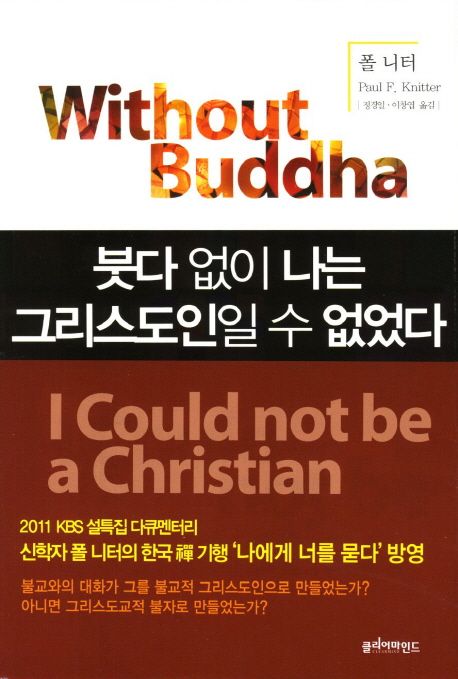
As comparative theology has come to occupy an important place in global theological discourse, an interesting phenomenon has emerged: it now develops not only across the boundaries between religions but also across those between existing types or models of theology of religions. Francis Clooney, James Fredericks, and S. Mark Heim, while holding an inclusivist position in their theology of religions, have attempted deep investigation of other religions. In the pluralist camp, Wilfred Cantwell Smith authored studies of Islam highly regarded within religious studies, Paul Knitter published the comparative-theological Without Buddha I Could Not Be a Christian, and Perry Schmidt-Leukel wrote Understanding Buddhism, a substantial introduction. John B. Cobb, Jr., pursuing a “deep pluralism,” made a major contribution to Buddhist-Christian dialogue. Most striking of all, Harold Netland, commonly classified as an exclusivist, also co-wrote with Keith Yandell Buddhism: A Christian Exploration and Appraisal, even if from a primarily critical standpoint. These inter-theological investigations of other religions show that one can study other religions comparative-theologically while holding differing theological positions on their truth and salvation. Undertaken seriously, such work allows even an exclusivist position to overcome at least the unilateral criticism rooted in ignorance and disregard.
What I want to emphasize here is how such comparative-theological endeavors relate and contribute to the common good. For this, it is worth drawing on Hans Küng, who envisioned interreligious dialogue for peace and, on that basis, a “global ethic.” Perhaps the most famous of his claims is this: “No peace among the nations without peace among the religions.” This axiom most clearly demonstrates the need for public interreligious dialogue and cooperation in pursuit of peace as a common good. Küng, however, deepens this insight through two further stages. First, he adds: “No peace among the religions without dialogue between the religions.” That is, religions must dialogue with one another if their relations are to be peaceful. He then advances further still: “No dialogue between religions without investigation of the foundations of the religions.”[7] For interreligious dialogue to be fruitful, in other words, a deep investigation of both one’s own religion and others is necessary. However well dialogue may seem to proceed, exchange among those with only superficial knowledge of their own tradition produces misunderstanding, not understanding. Moreover, dialogue lacking a deep grasp of religion’s intellectual, spiritual, and ethical dimensions may remain merely diplomatic. Mutually transformative dialogue, therefore, requires deep understanding of both one’s own religion and the other’s. This is presumably why, in his later years, Küng wrote the 800-page Islam: Past, Present, and Future.
Methodologically, an important resource for considering the possibility and necessity of comparative public theology in an age of globalization is the “world theology” of W.C. Smith. He called this world theology, proposed as the conclusion of his lifelong historical study of religion, a “theology of comparative religion.” Central to Smith’s methodology is the notion of “colloquy.” He says:
As a term I prefer ‘colloquy’ [to ‘dialogue’]; partly for its multilateral connotations but chiefly to suggest a side-by-side confronting of the world’s problems (intellectual and other) rather than a face-to-face confronting of each other.[8]
That is, Smith proposes moving from bilateral dialogue to multilateral colloquy, whose purpose is the resolution of “the world’s problems” that religions confront together. Through it, people of each tradition can share and learn from one another’s wisdom, spirituality, and ethics regarding common problems, and thereby cooperate for the sake of the common good. Smith did not regard world theology as belonging to Christianity alone: constituted through the colloquy of differing traditions, it might well be called a multi-traditional theology. This avoids the limitation of theology of religions discussed earlier—judging without learning—while never losing sight of the goal of publicness.
The clearest articulation of this joint pursuit of religious diversity and social publicness comes from the Sri Lankan Jesuit liberation theologian Aloysius Pieris, S.J. He emphasizes that in Asia religiosity and poverty are inseparable realities, and that the church should therefore experience “double baptism” into “the Jordan of Asian religions and the Calvary of Asian poverty.”[9] On this basis, Pieris integrates theology of religions with liberation theology. This is a shared awareness among Asian liberation theologians and Christians. The Federation of Asian Bishops’ Conferences, for instance, presents the task of interreligious dialogue in Asia as follows:
In the developing, multireligious societies of Asia, struggling towards liberation and wholeness, all religions are called to provide a common and complementary moral and religious foundation for this struggle, … They can do this only through dialogue and collaboration. The religions have a prophetic role in public life.[10]
In the same vein, Korean minjung theology includes a practical awareness of religious diversity. In Korea, indigenization theology and minjung theology have coexisted in a relationship of both tension and complementarity. The complementarity is especially significant: through this coexistence, both theological movements fused their religio-cultural and socio-political dimensions. Minjung theology regards Korea’s traditional religious culture as one of its key paradigms, as Suh Nam-dong’s “confluence of two stories” shows. Suh includes other religions in this confluence as well—on the Christian side (the Exodus, the crucifixion, millenarian movements) and on the Korean minjung side (Donghak [Eastern Learning, 東學], Maitreya Buddhist faith, the event of Jeon Tae-il) alike.
Ahn Byung-mu, too, had a deep interest in Korean religious traditions. His doctoral thesis at the University of Heidelberg was Das Verständnis der Liebe bei K’ung-tse und bei Jesus (Understanding Love in Confucius and Jesus), comparing the Confucian concept of ren (benevolence, 仁) with the Christian concept of agape. His theological interests were comparative and public from the outset. Ahn interprets the “forbidden fruit” in the Genesis narrative of the Fall as “gong” (publicness, 公), arguing as follows:
Something that all may receive together, yet that should not be privatized—this is gong, or the public. The sky, for instance, is gong. No one can privatize it. The earth, too, is originally gong. One may cultivate it and share its produce, but cannot privatize it. God, too, must be said to be gong. God is to all people, yet can be possessed by no one. No sect or religion can monopolize God, nor can God be monopolized. Therefore, to trespass upon this gong is to shatter the order of the whole. This, presumably, is the reason why it [the fruit] was forbidden.[11]
The insight that God is gong, and cannot be monopolized by any single religion, resonates with themes shared by public theology, theology of religions, and comparative theology. Ahn’s boundary-crossing inquiry continued: as he developed minjung theology into a “theology of life (salim),” he embraced Eastern religious traditions. In a lecture given in his later years, he went so far as to say: “As Christians living in the age of plurality, the first thing we need to learn from other religions, especially Buddhism and Taoism, is silence. … Unless Christianity opens its doors and learns respectfully about the world of silence, there will be no way out of the present impasse.”[12]
This kind of theological complementarity also occurred within Korean indigenization theology. A leading example is the Methodist theologian Byun Sun-hwan, condemned as a heretic and excommunicated by the Korean Methodist Church for supporting religious pluralism. Byun actively drew on the theological insights of figures such as Knitter and Pieris, proposing a “liberation theology of religion” in the Korean context. To this end, he argued that Korean minjung theology must actively encounter and engage in dialogue with Korea’s Confucian, Buddhist, Daoist, and shamanistic traditions, and that the success or failure of Korean indigenization theology “depends on how well it can encompass, within theology, both the religious concerns and the political concerns of the suffering minjung.”[13]
The Korean theologian who most clearly attempted this complementarity between minjung theology and indigenization theology is the late Kim Kyung-jae. It was he who illuminated the relationship of both tension and complementarity between the two Korean theological movements discussed above. Though situated within the minjung theology tradition, Kim devoted his life to a deep exploration of Confucianism, Buddhism, and Donghak. His foremost concern was the salvation and liberation of all suffering beings. Kim argues as follows:
The ultimate purpose of interreligious dialogue does not lie in the academic achievement of dialogue itself, but in saving, healing, liberating, and enriching life. … It is on this common front of the salvation or liberation of life that socio-political theology and religio-cultural theology meet, and it is there, too, that Christianity and other religions meet.[14]
Kim’s theology may be called a proto-model of Korean comparative public theology.
This theological mapping confirms that, in a context where globalization has made every religion present everywhere, public theology needs to expand its horizon by incorporating the intellectual, spiritual, and ethical achievements of theology of religions and comparative theology. Public theologians themselves have already recognized this need. David Tracy argues that “dialogue among the religions is no longer a luxury but a theological necessity.”[15] Heinrich Bedford-Strohm, who has attempted public theology within the multi-religious context of Europe, particularly Germany, states: “The theme of Public Theology and Interreligious Dialogue is a crucial theme for the church and for society as a whole. It might not be too audacious to say: it is one of the most important themes of the coming years.”[16] Paul S. Chung likewise states that “Comparative theology is much needed […] with respect to interreligious dialogue as a prophetic mission and the sociological study of religion,”[17] linking comparative theology with postcolonial theology and undertaking phenomenological and hermeneutical comparative work with Confucianism and Buddhism.
All of this shows that, in the theory and practice of public theology today, interreligious dialogue and cooperation are not optional but essential, and that theology of religions and comparative theology can offer useful help in this process. Such a comparative public theology must operate on two levels. First, within Christianity, it should help churches and Christians develop religious literacy and engage more openly in interreligious dialogue and cooperation for the common good. Second, beyond Christianity, it should invite other religions to join in interreligious dialogue and diapraxis for the sake of publicness and the common good. What matters here is to sustain this ethical focus on publicness and the common good from beginning to end. Chung clarifies this point as follows:
In interreligious dialog; the priority is to express an ethical concern and commitment to the lowest of the low (Matt 25) in the religious world because these are brothers and sisters of Jesus Christ. Ethical-practical concern shapes our interreligious dialog in sharing religious wisdom and spirituality. It hermeneutically develops intertextual and scriptural similarity-in-difference between the Christian narrative and non-Christian wisdom promoting mutual respect and self-renewal in light of the communicative mystery of God.[18]
Everything aims at the realization of the ethical common good, toward which each religion offers its deepest and best wisdom and spirituality, comparing and learning from one another, and thereby cultivating together the capacity to address the problems of the age. This mutual maturation of multi-religious capacity is all the more urgent for religions facing today’s dual crisis, social and ecological.
4. Comparative Public Theology in an Age of Social and Ecological Crisis
In the wake of secularization and de-religionization, many religious people are anxious about the future of religion. As commitment to and interest in religion diminish, religions in many societies—particularly Western Christianity—are seeing declines in both adherents and institutional influence. To be sure, since the close of the last century, figures such as Peter Berger have argued for “desecularization,” and since 9/11 some have spoken of “the return of the religious.” Yet it remains undeniable that institutional religion is losing social influence. A more serious problem is that religion proves most destructive when it allies itself with the far right or with forces of discrimination and hatred. Religion seems clearly to be undergoing a total crisis.
There are, however, crises far more urgent than this crisis of religion that demand our attention: social crisis and ecological crisis. Together they constitute a shared negative experience of our age, one that threatens the well-being and survival of both human and nonhuman beings alike.
First, the most serious social crisis is the global governmentality of neoliberalism, the most extreme and aggressive form of capitalism to emerge since the Industrial Revolution. Neoliberalism has, in effect, achieved monopolistic dominance over the world, exerting its power not only in capitalist societies but even in communist-governed ones such as China. This omnipresent neoliberalism stands, in its very essence, at the opposite pole from publicness—as Margaret Thatcher famously and infamously declared, “there is no such thing as society.” Neoliberalism privatizes and marketizes public domains and individualizes and commodifies human beings. Its ethic of life imposes infinite competition, winner-take-all, and each person fending for themselves. To survive, one must compete with others and become the sole survivor—as in the dark metaphors of the reality show Survivor or the reality drama Squid Game. In the process, individuals must also compete fiercely against themselves, through self-development and self-exploitation, to become a better product. Those who fail are discarded as what Zygmunt Bauman called “human waste.”[19]
The wave of far-right movements surging across the world today can likewise be traced to the inequality and anxiety produced by neoliberalism’s negative globalization. What is significant here is the strange symbiosis between neoliberal and far-right forces. Having arisen in the wake of negative globalization, the far right nominally presents itself as anti-globalist. Yet it does not attack the neoliberal capitalist system itself. On the contrary, it becomes capital’s ally. Even the victims of neoliberalism whom the far right incites and mobilizes do not challenge neoliberalism, their actual victimizer. Individualism and competition-ism have become so deeply internalized that individual failure is attributed not to an unjust system but to one’s own incompetence. Tragically, those who suffer chronic inequality and anxiety under neoliberal governmentality direct their frustrated anger not at the system but at others—the powerless rather than the powerful.
In this neoliberal age of anxiety, religion’s urgent task is not to become yet another private healing commodity, but to cultivate its communal capacity and function as a public network of care. As emphasized in Section 2, this is possible, since preferential love and compassion for the weak are a shared feature of religions, and throughout history many religious communities have performed public caregiving functions such as education, health care, and relief. Religious communities are especially expected to care for the social minorities and the vulnerable who fall into the blind spots of social welfare—those whom the state and civil society have failed to reach. Only when religion welcomes, loves, and cares for those in crisis within a neoliberal order devoid of publicness can it regain the social trust it has lost—and this will be the only way to overcome the crisis of religion.
Second, the crisis all religions today must urgently discern together and join in overcoming is ecological crisis. This crisis is global. The warming caused by carbon emissions, a byproduct of industrial-growth civilization, is not national warming but global warming. This is why people in poorer countries, who bear relatively little responsibility for emissions, become the greatest victims of climate disasters, and why acid rain falls even on the factory-free Amazon rainforest. Although the Anthropocene was not formally ratified at the 2024 International Geological Congress, it has already become—emotionally, culturally, and spiritually—a reality for many people. The planet is in crisis. Many Anthropocene scholars find that the Earth is crossing its limits of sustainability.[20]
The core strategy of contemporary ecological movements seeking to overcome this global eco-crisis is glocal awareness and action. The climate crisis is global, yet its causes and solutions can be local in highly complex ways. Micro-level local actions now underway in many countries and cultures, when linked to transnational ecological networks, may help slow down the pace of the planet’s destruction, while macro-level agreements such as the Paris Agreement or the SDGs can in turn have an impact locally. The practice of ecological justice can thus unfold glocally.
In the practice of ecological publicness demanded by today’s ecological crisis, religion may perhaps find its most important public usefulness. This crisis is a negative outcome of modern industrial-growth civilization, and so cannot be overcome by science, technology, or legal institutions alone. During the COVID-19 pandemic, many argued for the necessity of civilizational transformation. If civilization is the cause, only by changing civilization can humanity and the planet have a sustainable future. Here religion can play a vital role, for religions possess in abundance the wisdom, spirituality, and ethics this transformation requires.
Many religious traditions hold ecological modes of thought, spirituality, and ritual expressing the coexistence between human and nonhuman beings on the planet: Buddhism’s doctrine of interdependent co-arising; Judaism and Christianity’s creation theology; Confucianism and Daoism’s view of the harmony of all things; the nature-affinitive spirituality and culture of shamanism. All carry the wisdom to recognize the beings of nature not as things for humans to use at will, but as “nonhuman persons”[21] to be respected and coexisted with. Comparative public theology can therefore move beyond the boundaries of Christian theology, drawing on the wisdom of each tradition to address our shared ecological crisis and proposing cooperation toward an ecologically sustainable civilization.
Moreover, as in overcoming the social crisis, it matters that religions possess communities capable of practicing ecological publicness. Religious communities are value-oriented: gathered around shared spiritual and moral values, they exert a positive influence both within and beyond themselves. What is especially significant is that such communities exist everywhere—in cities and rural villages, fishing and mountain villages, desolate deserts and remote islands alike. If they practice ecological publicness as one element of their faith, they can become laboratories and proving grounds for civilizational transformation.
Precisely here, in this compound planetary social and ecological crisis, lie the usefulness of religion and the need for and possibility of comparative public theology. If religions participate in the public sphere, share the wisdom needed for civilizational transformation, and build models of dialogue and cooperation with other public actors, then hope remains—openings are still there for us.
5. Conclusion: Comparative Public Theology as an “Adjective”
Today, public theologyhas established itself as a recognized subfield within Christian theology, and its theoretical and practical horizons have become globalized. At this moment, when the survival of all life on this planet is imperiled by the erosion or absence of social and ecological publicness, the existence and task of public theology have become more important than ever.
Yet, as this article has emphasized, we must remember that because all religion is public, all theology is public as well. The history of public theology as a named field is relatively short, but the history of theology’s publicness stretches back two thousand years. Even without bearing the proper name public theology, no theology can ignore publicness. Given the inherent publicness of all religion and all theology, public theology may be understood not so much as one independent theological field or subdiscipline, but rather as a kind of trans-theological reminder that calls theology back to its own foundational publicness. In the same vein, comparative public theology can also be understood not as another subfield of public theology, but as a method that emphasizes the comparison and interreligious dialogue and cooperation indispensable to the practice of public theology in today’s multi-religious age. At the same time, this can be understood as an emphasis on the publicness of theology directed toward theology of religions and comparative theology in this multi-suffering age. In short, comparative public theology is best understood as an adjective rather than a noun. It suggests that all theology, and indeed every religious tradition, ought to be both interreligious and public. Practiced within the public sphere of a multi-religious and multi-suffering world, it embodies what Smith called colloquy: a shared process of discerning common problems together.
To this end, a deeper dialogue is needed between global public theology and Asian liberation theologies, including minjung theology, which have already, for some time, theologically reflected on multi-religiosity and multi-suffering. In particular, when fundamental civilizational transformation is itself a sign of the times, there is a need to learn from and liberatively apply Asia’s religious wisdom. Within Christianity, public theology already exhibits the broadest form of inter-church ecumenism. Comparative public theology can contribute to broadening and deepening this further into an interreligious ecumenism, in which religions meet at the site of crisis and pray, study, and act together for the common good—so that we might together repair the oikos, the house of human and nonhuman persons alike, whose very foundations are now shaking.
Bibliography
Ahn Byung-mu. Minjung gwa Sungseo [Minjung and the Bible]. Seoul: Hangil-sa, 1993.
———. “Minjungsinhak-ui abeoji Ahn Byung-mu [Ahn Byung-mu, a Father of Minjung Theology].” Kidokkyo Sasang 40, no. 8 (August 1996): 81–100.
Bedford-Strohm, Heinrich. Liberation Theology for a Democratic Society: Essays in Public Theology. Zürich: Lit Verlag, 2018.
Byun Sun-hwan. Jonggyo-gan Daehwa wa Asia Shinhak [Interreligious Dialogue and Asian Theology]. Cheonan: Korean Theological Institute, 1996.
Chung, Paul S. Comparative Theology Among Multiple Modernities: Cultivating Phenomenological Imagination. Cham: Palgrave Macmillan, 2017.
———. Public Theology in an Age of World Christianity: God’s Mission as Word-Event. Cham: Palgrave Macmillan, 2017.
Clooney, Francis X. Comparative Theology: Deep Learning Across Religious Borders. Malden, MA: Wiley-Blackwell, 2010.
Day, Katie, and Sebastian Kim, eds. A Companion to Public Theology. Leiden: Brill, 2017.
Federation of Asian Bishops’ Conferences, Theological Advisory Commission. “Theses on Interreligious Dialogue: An Essay in Pastoral Theological Reflection.” 1987.
Kim Kyung-jae. Jonggyo-dawon-sidae-ui Kidokkyo Youngseong [Christian Spirituality in the Age of Religious Plurality]. Seoul: Dasangeulbang, 1992.
Knitter, Paul F. One Earth, Many Religions: Multifaith Dialogue and Global Responsibility. Maryknoll, NY: Orbis Books, 1995.
Küng, Hans. Islam: Past, Present and Future. Translated by John Bowden. Oxford: Oneworld, 2007.
Lenton, Timothy M., et al. Global Tipping Points Report 2025. Exeter: Global Systems Institute, University of Exeter, 2025.
Pieris, Aloysius. An Asian Theology of Liberation. Maryknoll, NY: Orbis Books, 1988.
Smith, Wilfred Cantwell. Towards a World Theology: Faith and the Comparative History of Religion. Maryknoll, NY: Orbis Books, 1989.
Tracy, David. Dialogue with the Other: The Inter-Religious Dialogue. Louvain: Peeters, 1990.
Weber, Max. The Religion of India: The Sociology of Hinduism and Buddhism. Translated by Hans H. Gerth and Don Martindale. Glencoe, IL: The Free Press, 1958.
[1] Katie Day and Sebastian Kim, “Introduction,” in A Companion to Public Theology (Leiden: Brill, 2017), 2.
[2] E. Harold Brietenberg, Jr. “To Tell the Truth: Will the Real Public Theology Please Stand Up,” Journal of the Society of Christian Ethics, 23:2 (2003), 66, quoted in Ibid., 4.
[3] Paul F. Knitter, One Earth, Many Religions: Multifaith Dialogue and Global Responsibility (Maryknoll: Orbis Books, 1995), 36.
[4] Max Weber, Religion of India: The Sociology of Hinduism and Buddhism, tr. Hans H. Gerth and Don Martindale (Glencoe: The Free Press, 1958), 213.
[5] Francis X. Clooney, S.J., Comparative Theology: Deep Learning Across Religious Borders (Malden: Wiley-Blackwell, 2010), 10.
[6] Ibid., 69.
[7] Hans Küng, Islam: Past, Present and Future, tr. John Bowden (Oxford: Oneworld, 2007), vi.
[8] Wilfred Cantwell Smith, Towards a World Theology: Faith and the Comparative History of Religion (Maryknoll: Orbis Books, 1989), 193.
[9] Aloysius Pieris, An Asian Theology of Liberation (Maryknoll: Orbis Books, 1988), 3-4.
[10] Theological Advisory Commission of the Federation of Asian Bishops’ Conferences, “Theses on Interreligious Dialogue: An Essay in Pastoral Theological Reflection” (1987), 3-4.
[11] Ahn Byung-mu, Minjung gwa Sungseo [Minjung and the Bible] (Seoul: Hangil-sa, 1993), 439.
[12] Ahn Byung-mu, “Minjungsinhak-ui abeoji Ahn Byung-mu [Ahn Byung-mu, a Father of Minjung Theology],” Kidokkyo Sasang, vol. 40, no. 8 (1996, 8), 97.
[13] Byun Sun-hwan, Jonggyo-gan Daehwa wa Asia Shinhak [Interreligious Dialogue and Asian Theology] (Cheonan: Korean Theological Institute, 1996), 129.
[14] Kim Kyung-jae, Jonggyo-dawon-sidae-ui Kidokkyo Youngseong [Christian Spirituality in the Age of Religious Plurality] (Seoul: Dasangeulbang, 1992), 174,
[15] David Tracy, Dialogue with the Other: The Inter-Religious Dialogue (Louvain: Peeters, 1990), 95.
[16] Heinrich Bedford-Strohm, Liberation Theology for a Democratic Society: Essays in Public Theology (Zürich: Lit Verlag, 2018), 221.
[17] Paul S. Chung, Comparative Theology Among Multiple Modernities: Cultivating Phenomenological Imagination (Cham: Palgrave Macmillan, 2017), 1.
[18] Paul S. Chung, Public Theology in an Age of World Christianity: God‘s Mission as Word-Event (Cham: Palgrave Macmillan, 2017), 66-67.
[19] See Zygmunt Bauman, Wasted Lives: Modernity and Its Outcasts (Oxford: Polity Press, 2013)
[20] Indeed, 160 authors from 87 institutions in 23 countries report that “Cryosphere tipping points may already have been crossed” and that “Biosphere tipping points are approaching faster than we thought.” See Timothy M. Lenton et al., Global Tipping Points Report 2005 (Exter: Global System Institute at University of Exter, 2025), 21.
[21] See A. Irving Hallowell, “Ojibwa Ontology, Behavior, and World View,” in Culture in History: Essays in Honor of Paul Radin, ed. Stanley Diamond (New York: Columbia University Press, 1960) Hallowell’s original term was “other-than-human persons.”