Public Bulletins are news items, informational content, and public debates intended for dissemination and exchange by an authoritative source. They focus on public theology, engaging with the dialogue between science and religion, as well as with technology—exploring how technology thinks, acts, and organizes society and culture, particularly through developments in artificial intelligence, genetic engineering, and cybersecurity.
Science–religion dialogue is an essential dimension of shaping public theology, particularly in relation to science, technology, epigenetics, and ecology—domains that are transforming socio‑cultural reality in a rapidly emerging posthuman context. Critical realism offers an innovative framework for understanding the relationship between science and religion, while cultural narrative attends to the techno‑paradigmatic shifts introduced by systems biology and epigenetic factors. Together, they illuminate the interface among science, religion, and ethics.
This articulated position addresses network thinking, cybernetics, and structural coupling in defining autopoiesis, communication, and co‑constitution within the social‑ecological web of life as a central regime of a public theology of science. Such a public theology examines the scientific construction of socio‑cultural reality in conversation with systems sociology, embodied phenomenology, and the life sciences. It highlights the significance of dissipative structures, living systems in structural interaction, and the emergence of new forms of life—processes that bring forth meaningful transformations in society, culture, and religion.
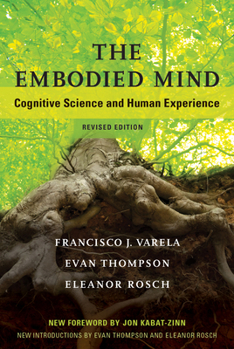
A Supertheory: Linguistic Networks and Semantic Ethics of Lifelines
A Supertheory: Linguistic Networks and Semantic Ethics of Lifelines Abstract This chapter develops a supertheory of social systems by integrating
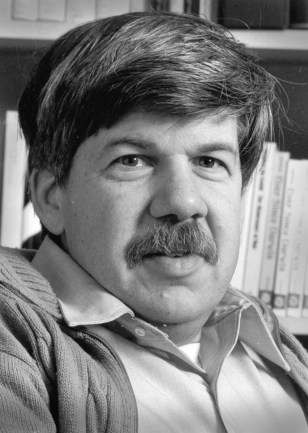
Stephen Jay Gould, Punctuated Equilibrium, and NOMA
Stephen Jay Gould, Punctuated Equilibrium, and NOMA:A Public Theology Appraisal By Paul S. Chung Distinguished full professor and director of

Semantic Modernity and Homo Technicus: Science–Religion Adjacency
Semantic Theory of Modernity, Homo Technicus, and the Philosophy of Adjacency Abstract An ethical articulation of social systems theory with

Phenomenology, Systems Biology, and the Architecture of Autopoiesis
Self‑Referential Systems, Embodiment, and Public Theology Abstract This chapter returns to Niklas Luhmann’s theory of social systems and reinterprets autopoiesis